
Financial stress isn’t just a math problem; it’s a physical weight. It affects how you sleep, how you perform at work, and how you interact with your family. In 2026, as we all navigate a fast-paced economy, it’s worth looking at the connection between our wallets and our wellness.
Often, we feel paralyzed because our financial problems feel too big to solve at once. You don’t need to pay off your mortgage today to feel better; you just need a Micro-Win.
When we’re stressed about money, we fall into a “scarcity mindset.” Our brains focus entirely on immediate threats (like a bill due tomorrow) and lose the ability to think about long-term solutions. It’s a survival mechanism, but it makes financial growth impossible.
To break this cycle, you need to regain a sense of control. Here are three “Micro-Wins” you can achieve this week:
If your “Micro-Wins” reveal a larger issue—like a high-interest credit card balance that feels like it’s suffocating you—a Personal Loan or Sweet Home FCU Visa Card (with balance transfer) can be a major wellness tool.
Consolidating scattered, high-interest debt into one single, lower monthly payment clears “mental tab clutter.” Instead of worrying about five different due dates and interest rates, you have one plan and a clear end date. Financial wellness is a marathon, not a sprint. Celebrate the small wins this month!
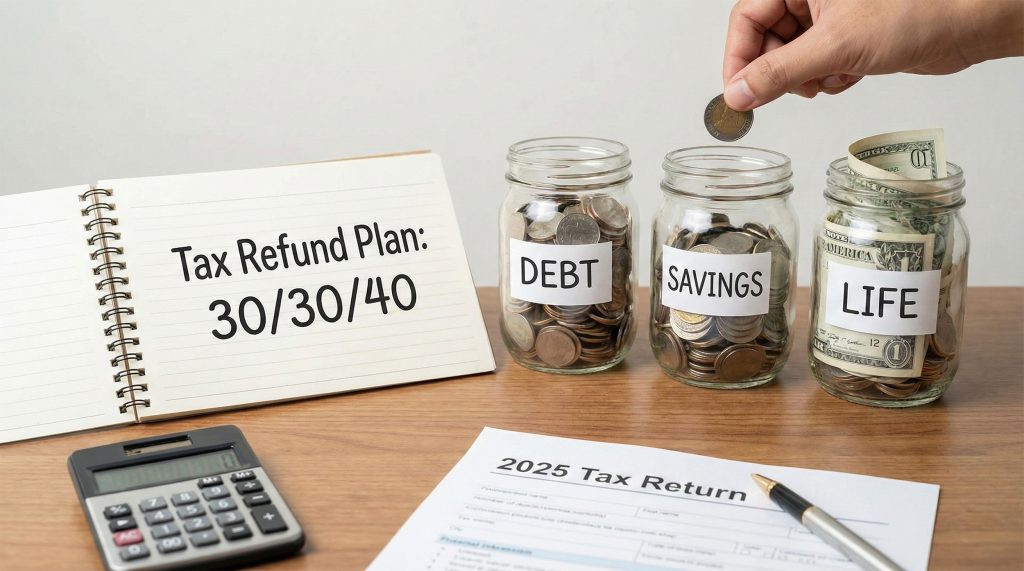
For many Americans, a tax refund is the largest single “paycheck” they receive all year. It is a moment of pure financial potential, but it is also a moment of extreme temptation. When a few thousand dollars hits a checking account without a predetermined mission, it tends to evaporate through “lifestyle creep”—a series of small, impulsive upgrades that feel good in the moment but leave your net worth unchanged.
To turn a one-time windfall into a lifetime of financial momentum, you need to plan your strategy in February, well before the IRS processes your return.
A balanced approach ensures you satisfy your immediate needs while honoring your future self. Here’s how to break down your windfall for maximum impact:
What if you have a high-interest debt that is costing you $150 a month in interest right now, but your refund won’t arrive until April? Or what if you have a pressing home repair that costs more than your expected refund?
This is where a Sweet Home FCU Personal Loan acts as a strategic bridge. Instead of letting high interest compound for another 60 days, you can use a lower-rate personal loan to consolidate that debt immediately. When your refund finally arrives, you can apply the entire amount as a massive principal-reduction payment. This move effectively “kills” the high-interest debt two months earlier and significantly shortens the term of your bridge loan.
Log into your tax software or meet with your preparer this week to get your estimated refund number. Don’t wait for the money to arrive to decide what to do with it. Having a mission for every dollar turns a windfall from a temporary luxury into a permanent foundation.

Most people wait for the blossoms of spring or the “model year-end” clearances of autumn to start car shopping. There’s a traditional logic to it—but it’s a logic that usually leads to crowded showrooms, picked-over inventory, and exhausted salespeople. If you want to find the true “sweet spot” of the automotive calendar, you have to look at the month everyone else is ignoring.
February is notoriously the quietest month on the dealership lot. The holiday rush is a distant memory, tax refunds haven’t fully hit bank accounts yet, and the biting winter weather keeps casual window-shoppers at home. This silence is your greatest negotiating tool. When a dealership is empty, the power dynamic shifts dramatically toward the buyer.
Dealerships are high-pressure environments, but that pressure usually flows toward the customer. In February, the pressure flows toward the sales manager. They still have monthly quotas and “floorplan” costs—the interest the dealer pays to keep those cars sitting on the lot. A car that sits in the snow for thirty days is costing the dealer money every single day.
When you walk in during a lull, you aren’t just another lead; you are the only lead. Salespeople are far more motivated to negotiate on price, throw in add-ons, or offer better trade-in values just to get a deal on the board. However, to maximize this leverage, you need to arrive with your financing already solved.
While you negotiate the price, Sweet Home FCU has handled the heavy lifting on the backend. Our current auto loan special is designed to provide maximum breathing room: 3.99% APR for up to 72 months on 2020 models or newer.
In a typical market, a longer-term loan (like 72 months) usually comes with a much higher interest rate to offset the lender’s risk. We’ve broken that mold. By locking in a rate as low as 3.99% for six years, you gain three distinct advantages:
Don’t wait for the April rush when the lots are full of shoppers with tax refund checks. Use the February chill to your advantage. Get your pre-approval squared away, grab your coat, and head to the lot while the world is still quiet. Contact our team today to get started!

If you wait until the first warm Saturday in April to call a contractor for your home renovation, you’re already too late. By the time the cherry blossoms appear, most reputable plumbers, painters, and landscapers have their calendars booked through July.
If you want to get your home “Spring Ready,” you have to act while the ground is still frozen. February is the strategic month for remodeling planning, and a Sweet Home FCU Personal Loan is the tool for getting it done.
Contractors often face a lull in late winter. During this time, you aren’t just another number on a long list; you’re the client they have time to talk to.
A home project is only as good as its funding. Many people default to high-interest store credit cards for materials. These cards often have APRs north of 25% once the “promotional period” ends. Instead, a Sweet Home FCU Personal Loan offers a clean, fixed-rate solution.
| Feature | Personal Loan Benefit |
| No Collateral | You don’t have to put your home at risk to get the funds. |
| Fixed Interest Rate | Unlike a credit card, your rate won’t change, making your monthly budget predictable. |
| Lump Sum Funding | Get the full amount upfront to pay deposits or buy all your supplies in one trip to save on delivery fees. |
You don’t need a total kitchen gut-job to make a difference. Focus on “Pre-Spring” projects that can be done indoors right now:
Secure your funding, find your contractor, and get ahead of the crowd. When your neighbors are waiting for a callback in May, you’ll be enjoying your newly finished space. Get in touch with our lending team today to get started!

The urge to learn something new is powerful. Whether it’s signing up for a pottery class, finally taking golf lessons, or investing in a professional photography setup, a new hobby or skill does more than fill your time—it enriches your life.
However, many “passions” come with a steep entry price. The “startup costs” of a new hobby can be a major barrier to entry. And if you’re not careful, the excitement of a new interest can lead to impulsive spending that stings later. Here are some quick tips to budget for the “New You” without the financial hangover.
Before you drop $2,000 on a high-end mountain bike or a professional espresso machine, give yourself a 30-day trial. Rent the equipment. Take a single introductory lesson. Use the SHFCU Visa Card to pay for these smaller “test” costs. If you’re still obsessed after a month, then you know it’s a worthy investment.
Every hobby has them. For golf, it’s not just the clubs; it’s the greens fees and the balls you’ll inevitably lose. For gardening, it’s not just the plants; it’s the soil, the mulch, and the tools. When you’re setting your “Passion Budget,” make sure you’re looking at the total cost of ownership for the first six months.
If your new passion requires a significant upfront investment—like a high-end sewing machine for a burgeoning business or a specialized certification course—don’t feel like you have to drain your emergency savings to make it happen.
A Sweet Home FCU Personal Loan is a smart way to finance a “New You” investment. By spreading the cost of the equipment or tuition over 12 or 24 months at a low, fixed rate, you can pursue your passion immediately while keeping your monthly budget stable. It turns a “some day” dream into a “today” reality.
It’s tempting to want the best gear immediately. But there is a special kind of joy in “leveling up” as your skills improve. Start with high-quality entry-level gear. Use your SHFCU savings account to set aside a small amount each month specifically for your “Upgrade Fund.” When you hit a skill milestone, you’ll have the cash ready to celebrate with new equipment.
Investing in yourself is the best investment you can make. By planning ahead and using the right financial tools, you can ensure your new passion brings nothing but joy to your life!

We all have that one list. It’s tucked in a kitchen drawer or saved in a phone note. It’s the “To-Do” list for the house: the guest bathroom that needs new tile, the kitchen backsplash that’s stuck in the 90s, or the basement that’s currently just a storage unit for old boxes.
Often, these projects stay on the list not because we lack the vision, but because we lack the liquid cash to do them “the right way.” That’s where the Sweet Home FCU Personal Loan shifts from a financial product to a tool for progress.
A personal loan is one of the most versatile tools in your financial belt. Unlike a car loan, which is tied to a vehicle, or a mortgage, which is tied to your home, a personal loan is unsecured. This means you don’t have to use your home as collateral to get the funds.
For projects in the $2,000 to $10,000 range, a personal loan is often the “Goldilocks” solution:
In a previous post, we talked about whether you’re a DIY enthusiast or someone who prefers to call in the experts. A personal loan supports both paths.
If you’re doing it yourself, you can use the loan to buy high-quality materials upfront, often taking advantage of bulk discounts. If you’re hiring a pro, having the funds ready to go means you can secure a spot on their schedule and perhaps even negotiate a better “cash” price for the labor.
Home improvement isn’t just about resale value; it’s about how you feel when you walk through your front door. Fixing that leaky faucet or finally painting the living room removes a “micro-stress” from your daily life.
Stop waiting for “some day.” If you have the vision, we have the funds to help you cross those items off your list. Project Progress starts with a simple conversation with the friendly staff at Sweet Home FCU!
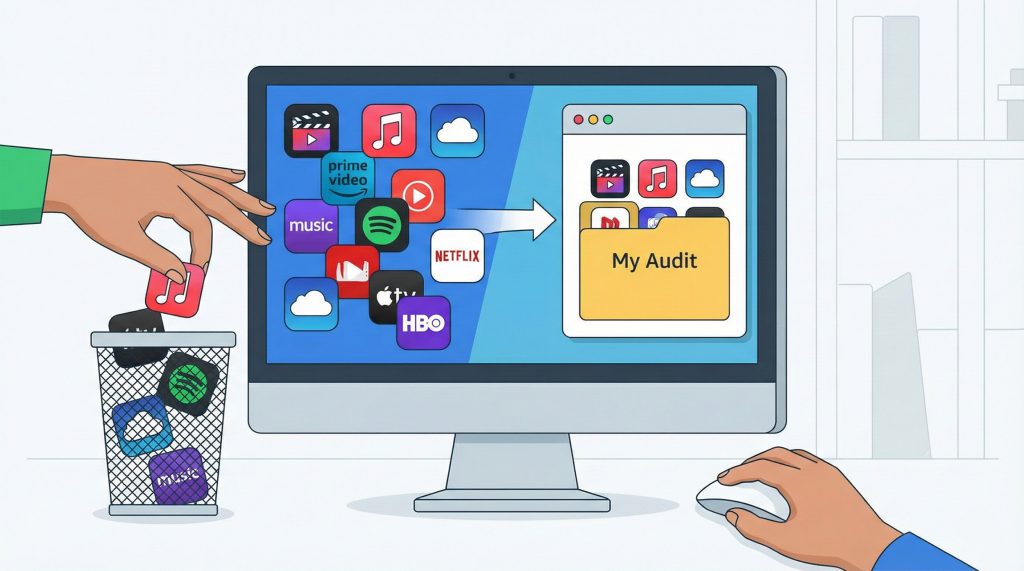
We live in a world of “set it and forget it.” It starts with a streaming service, then a gym membership, then a premium weather app, and suddenly, your bank statement is a graveyard of $9.99 and $14.99 charges.
Individually, these subscriptions feel like “small change.” Collectively, they’re a silent leak in your financial bucket. As we move into a new season of goal-setting, the most impactful thing you can do for your budget isn’t a massive lifestyle overhaul—it’s a Digital Audit.
Companies love subscriptions because they rely on “inertia.” They know that once you’ve linked your SHFCU Visa or checking account, you are unlikely to go through the hassle of canceling, even if you stop using the service. They’re betting on your forgetfulness.
“A subscription is a contract with your past self that your current self is still paying for.”
Don’t just look at your most recent statement. Look at the last three months. Many subscriptions are quarterly or annual, and they can surprise you when they finally hit.
For some, the “clutter” isn’t just digital; it’s physical. Maybe those subscriptions were part of a larger trend of high-interest credit card spending. If your audit reveals that you’re struggling to keep track of multiple payments, a Personal Loan can act as a “Macro-Audit.”
Instead of juggling five credit card due dates and 20 subscriptions, you can use a personal loan to consolidate your debt into one single, manageable payment. This doesn’t just “tidy up” your bank statement; it saves you money on high-interest retail rates and gives you a clear date for when you’ll be debt-free.
Your money should be working for your future, not paying for a version of yourself that no longer exists. Take thirty minutes this week to audit your digital life. You might be surprised at how much “found money” is waiting for you.

When you’re in the market for a new vehicle, the conversation usually revolves around two things: the car and the monthly payment. It makes sense. You want a ride that’s reliable and a payment that doesn’t eat your entire paycheck. However, savvy buyers know there is a third, more important factor: the APR.
Right now, Sweet Home FCU is offering a rare alignment of terms that usually don’t play well together. We’ve extended our auto loan sale featuring rates as low as 3.99% APR* for up to 72 months. Typically, when you increase the length of a loan, the interest rate climbs with it. But for a limited time, we’ve flattened that curve.
In the financial world, a six-year (72-month) term is often seen as a tool for flexibility. It’s designed for the borrower who wants to keep their monthly cash flow as high as possible. By spreading the cost of a 2020 or newer vehicle over 72 months, you lower the mandatory monthly obligation.
But here is the catch that usually trips people up: a long term at a high rate means you pay a mountain of interest. By locking in a 3.99% APR, you’re getting the low-rate benefit usually reserved for short-term loans, but with the breathing room of a long-term plan.
This special is particularly powerful if:
At Sweet Home FCU, we aren’t just a lender; we’re your neighbors. We don’t believe in the high-pressure tactics or the “hidden fee” surprises you might find at other institutions. Our goal is to make the financing process as smooth as the ride in your new vehicle.
When you choose to finance with us, you’re choosing a local team that is dedicated to your financial health. We take the time to ensure you understand your terms and that your new payment fits comfortably within your lifestyle. The road ahead is long—make sure you’re driving it with a rate and a monthly payment that feel as good as the car itself.
Ready to get started? Click here to apply now!
*APR = Annual Percentage Rate. Loan rates reflect the lowest rate available on approved credit as determined by the creditworthiness of each applicant. Existing Sweet Home FCU auto loans are not eligible for refinancing. Programs, rates, terms and conditions are subject to change without notice.

It’s the final countdown. The frenzy of holiday shopping is reaching its peak, the shipping deadlines have passed, and you’re faced with those last few names on your list. Your thoughts inevitably turn to the brightly colored, wallet-sized savior of the season: The Gift Card.
Is the gift card the ultimate symbol of practical generosity—guaranteeing the recipient gets exactly what they want? Or is it the holiday equivalent of “lazy money”—a gift that often goes unused, ultimately benefiting the retailer more than the recipient?
Let’s dive into the great holiday debate and weigh the pros and cons of this ubiquitous piece of plastic (or digital code).
When it comes to holiday giving, the gift card offers several compelling advantages that appeal to both the giver and the recipient.
The worst feeling is watching someone politely smile while unwrapping a sweater three sizes too large. A gift card, by its nature, eliminates this risk. It’s an assurance that the recipient will purchase something they genuinely need or want. It’s a guaranteed hit, which is a big relief for the busy last-minute shopper.
Gift cards are an excellent way to contribute to a larger purchase without footing the entire bill. Imagine your nephew is saving up for a gaming console. A $50 gift card to the electronics store isn’t just $50; it’s $50 that brings him one step closer to his goal. It shows you support his aspiration without forcing you to buy the item yourself.
For many, receiving cash can feel ambiguous—it tends to disappear into the general “checking account vortex.” A store-specific gift card, however, is money earmarked for a specific treat. It functions as a sinking fund for something fun. The recipient is forced to be intentional with that money, which is a great financial habit.
Despite their convenience, gift cards come with a few financial and emotional downsides that critics often point out.
This is the biggest financial critique. “Breakage” is the industry term for money that is paid for a gift card but is never redeemed. People misplace them, forget about them, or receive them for a store they rarely frequent.
In fact, billions of dollars on gift cards go unused every year. If you give a gift card, there’s a non-zero chance that your money simply reverts back to the retailer, and your recipient receives nothing.
What if the recipient hates the store? A gift card, unlike cash, restricts the buying choice. If the recipient receives a card for a store they only tolerate, they may end up buying something they don’t truly value just to avoid wasting the card—a type of forced spending that defeats the purpose of the gift.
While federal law requires gift cards to remain valid for five years, some older or specialty cards (or promotional codes) may have limitations or fees. Although this is less common than it used to be, it’s always worth checking the fine print.
So, should you pull the trigger on that rack of gift cards this week? Absolutely, but with a strategy:
Whether you see them as the pinnacle of practical giving or simply a necessary evil for last-minute shopping, gift cards almost always have a place in the holiday shopping plan.

December is the Super Bowl of consumer spending. Between last-minute online gifts, bustling in-store purchases, and holiday travel, your credit cards are working overtime. While the convenience of plastic is essential, this time of year is also prime season for fraud, data breaches, and general financial chaos.
This reality highlights a critical point: Where you swipe matters.
When you choose a Sweet Home FCU VISA Credit Card, you are choosing a low-rate, no-fuss solution backed by powerful security features. We want you to shop with confidence, knowing you have a reliable card and a dedicated team ready to support you.
Here are three layers of protection and convenience that make your SHFCU Credit Card the smart choice for holiday spending—and all year long.
Layer 1: The Zero-Liability Shield
The most important assurance when shopping is knowing that if a criminal steals your card number, you will not be held responsible for the charges.
Sweet Home FCU, like most major card issuers, offers a Zero-Liability Policy. This means your liability for unauthorized transactions is zero. When you report fraud, your personal finances are protected.
Expert Fraud Defense is Just a Call Away
We partner with an industry-leading credit card processor that specializes exclusively in fraud detection and resolution. This partnership gives you access to a dedicated, 24/7 expert resource focused only on protecting your money.
Layer 2: Control and Awareness Through Online Alerts
You don’t need a mobile app to maintain full awareness of your account activity. Through our secure website, you can set up comprehensive alerts that put you in control of every transaction.
This ability to customize your alerts means you maintain full visibility and can identify suspicious activity immediately, which is your best defense against long-term fraud issues.
Layer 3: The Smart Alternative to High-Rate Cards
Perhaps the greatest advantage of the SHFCU Credit Card is the financial security it provides through low rates and smart transfers.
For all your online and in-store holiday shopping, using a VISA credit card over a debit card is the single smartest move for financial defense. The SHFCU Credit Card acts as a necessary buffer, providing the low rates, awareness tools, and expert protection you need to shop safely. Make the smart choice for security and financial health this season. Click to apply now!